
Menopause Joint Pain: Why Your Joints and Body Ache at Midlife — and What Helps
The aches showed up out of nowhere — knees, hands, that nagging stiffness in the morning. The weight won’t budge no matter what you do. You feel puffy, tired, a little inflamed in a way you can’t name. And none of it quite adds up to a diagnosis, so the joint pain and body aches get waved off as “getting older.” But there’s a specific, biological thread connecting all of it — and it’s one of the most overlooked parts of the menopause transition.
That thread is inflammation. Menopause joint pain and body aches are real and common — and as estrogen declines through perimenopause and menopause, the body’s low-grade inflammation rises, a process researchers call “inflammaging.” It quietly drives joint pain and stiffness, stubborn weight, fatigue, skin changes, and, over the long term, raises the risk of serious disease. Understanding it is one of the keys to feeling — and aging — better.
At Refine by Tulsi, inflammation is one of the core systems we assess and address in our physician-led Refine Her program. Here’s the biology, why it matters, and what actually calms it.
Estrogen Is a Natural Anti-Inflammatory
Here’s the piece most people never learn: estrogen isn’t only a reproductive hormone — it’s one of the body’s natural anti-inflammatory agents. For decades, it helps keep the immune system balanced and inflammation in check.
When estrogen declines through perimenopause and menopause, that brake comes off. Systemic inflammation rises, reflected in higher levels of inflammatory markers like IL-6, CRP, and TNF-α. This isn’t the acute, helpful inflammation of healing a cut — it’s chronic, low-grade, body-wide inflammation that simmers in the background and gradually damages tissues and systems. That’s why it’s called “inflammaging”: inflammation that accelerates aging.
The Connection You Were Never Told
The joint aches, the weight that won’t shift, the fatigue, the faster-aging skin, the brain fog — these can feel like unrelated complaints of “getting older.” But rising inflammation ties many of them together into a single, addressable biological story. Treating the inflammation treats the thread running through all of them.
How Menopause Inflammation Shows Up
Chronic inflammation is involved in a surprising range of the symptoms women experience at midlife:
Joint pain & stiffness
New aches, morning stiffness, and the sense of a body that’s “rusting” — inflammation directly affects joints and connective tissue.
Weight resistance
Inflammation interferes with insulin sensitivity and metabolism, making weight harder to lose — a hidden driver of “menopause belly.”
Fatigue & low energy
Chronic inflammation is metabolically taxing and contributes to the deep, cellular tiredness so common in midlife.
Autoimmune flares
The shift in the inflammatory and immune environment can trigger or worsen autoimmune conditions in susceptible women.
Skin changes
Inflammation accelerates collagen breakdown and oxidative damage, contributing to faster-visible skin aging.
Mood & brain fog
Inflammation affects the brain too, contributing to low mood, anxiety, and the cognitive fog of perimenopause.
Why It Matters Long-Term
Beyond daily symptoms, chronic low-grade inflammation after menopause is a genuine longevity concern. It’s associated with increased long-term risk for several serious conditions — obesity, hypertension, diabetes, and cardiovascular disease among them. In other words, the same inflammation making you feel achy and tired now is also quietly raising your risk profile for the decades ahead.
This is why inflammation isn’t just a comfort issue to manage — it’s a core target in a longevity-focused approach to menopause. Calming it protects both how you feel today and how you age. It connects directly to cardiovascular risk and the broader view of menopause as a longevity turning point.
A Measured Word
Inflammation is one factor among several in midlife health, and the research linking hormones, inflammation, and long-term disease is active and nuanced. Not every ache or symptom is “inflammation,” and inflammatory markers should be interpreted by a physician in context. The goal is a thoughtful, tested, individualized approach — not blaming everything on one cause or chasing inflammation with unproven fixes.
What Actually Calms Menopause Inflammation
Because the inflammation is driven substantially by hormonal change and lifestyle factors, the most effective approach works on both — and on the downstream systems inflammation affects.
Address the Hormonal Root
Since declining estrogen removes a natural anti-inflammatory brake, hormone optimization, where appropriate, can help restore a more balanced inflammatory environment — addressing the root rather than just the symptoms.
Targeted Anti-Inflammatory Peptides
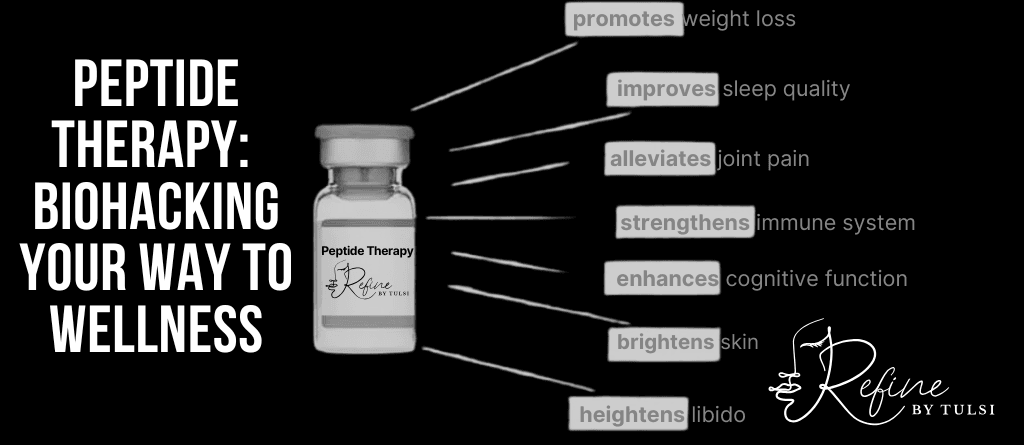
Certain peptides (such as BPC-157 and KPV) are used to support tissue repair, gut health, and reduced inflammation — part of a physician-designed protocol that works alongside hormones. We keep claims measured and the sourcing physician-supervised.
Metabolic & Weight Support
Because visceral fat is itself inflammatory, addressing the metabolic shift — through medical weight support, muscle preservation, and nutrition — reduces a major source of inflammation. It’s a virtuous cycle: less visceral fat, less inflammation, easier weight management.
Cellular & Mitochondrial Support
NAD+, nutritional support, and IV therapy support the cellular systems that inflammation taxes — helping restore the energy and resilience that inflammaging depletes.
Lifestyle Foundations
None of the above replaces the basics: an anti-inflammatory diet, resistance training, quality sleep, stress management, and limiting alcohol. These remain the foundation every medical therapy builds on — and they’re genuinely powerful against inflammation.
Feeling achy, puffy, and inflamed with no clear cause? Book a consultation at refinebytulsi.com/book. We can test inflammatory markers and build a plan that addresses the root — not just the aches.
The Refine Her Approach to Inflammation
Inflammation is one of the core systems our Refine Her program assesses — alongside hormones, metabolism, mitochondria, and collagen — because it connects to so many of the symptoms women struggle with and so much of long-term risk. Led by Dr. Tulsi Kotecha and Dr. Laura Ruof, the program measures inflammatory markers, identifies the drivers, and addresses them within one coordinated plan: hormones, targeted peptides, metabolic and cellular support, and lifestyle. Rather than treating joint pain, weight, and fatigue as separate problems, it treats the inflammation connecting them.
Real Patient Experiences
The joint pain and the weight that wouldn’t move were driving me crazy, and nobody connected them. Dr. Ruof tested my inflammatory markers, explained how my dropping estrogen was fueling the inflammation, and built a plan — hormones, peptides, and real nutrition changes. Within a couple of months the stiffness eased and my body finally started responding again. It was all connected the whole time.
I felt puffy and inflamed and exhausted and just assumed it was age. Understanding that inflammation was the thread tying it together changed everything. Treating it at the root instead of chasing each symptom separately is what finally worked.
Frequently Asked Questions
Does menopause cause joint pain?
Yes — joint pain, stiffness, and body aches are common in perimenopause and menopause, to the point that clinicians increasingly recognize a “musculoskeletal syndrome of menopause.” Falling estrogen (which has anti-inflammatory and joint-protective effects) plus rising inflammation drives the aches, which is why they often arrive alongside weight resistance and fatigue. Perimenopause joint pain can begin years before periods stop.
Does menopause really cause inflammation?
Declining estrogen is associated with rising low-grade, chronic inflammation, reflected in markers like IL-6, CRP, and TNF-α — because estrogen has natural anti-inflammatory effects. This “inflammaging” contributes to many midlife symptoms and long-term risks. It’s a well-recognized part of the transition.
Can inflammation be why I can’t lose weight?
It can be a contributing factor. Inflammation interferes with insulin sensitivity and metabolism, and visceral fat is itself inflammatory — creating a cycle that makes weight loss harder. Addressing inflammation is often part of breaking the “weight resistance” of midlife.
How do you measure inflammation?
Through blood tests for inflammatory markers (such as CRP) interpreted by a physician alongside your full picture. We don’t treat inflammation based on symptoms alone — we test, interpret in context, and build an individualized plan.
Will hormone therapy reduce my inflammation?
Because estrogen has anti-inflammatory effects, restoring it through hormone optimization can help rebalance the inflammatory environment for appropriate candidates. It’s one tool within a broader anti-inflammatory approach that also includes metabolic, cellular, and lifestyle support.
What can I do on my own?
A lot. An anti-inflammatory diet, resistance training, good sleep, stress management, and limiting alcohol genuinely reduce inflammation and are the foundation of any plan. Medical therapies build on these — they don’t replace them.
The Bottom Line
Rising inflammation is one of the hidden drivers of the menopause transition — the thread connecting joint pain, weight resistance, fatigue, skin changes, and long-term disease risk. As estrogen’s natural anti-inflammatory effect fades, “inflammaging” sets in, and it deserves to be assessed and addressed, not waved off as aging.
At Refine by Tulsi, Refine Her treats inflammation as a core system — testing it, identifying its drivers, and calming it through hormones, peptides, metabolic and cellular support, and lifestyle, all in one coordinated plan. Feel less inflamed now, and protect how you age.
Address the Inflammation, Not Just the Aches
Book a consultation at our Lincoln Park or Logan Square location. We’ll test inflammatory markers and build a coordinated plan to calm menopause inflammation at the root.
About Your Refine Her Physicians
Dr. Tulsi Kotecha, MD is the founder and medical director of Refine by Tulsi, with locations in Lincoln Park and Logan Square, Chicago. Dr. Laura Ruof leads the Refine Her longevity and hormone optimization programs, with a focus on metabolic health, inflammation, and whole-body vitality. Together they address inflammation as part of coordinated, root-cause women’s medicine.
This article is for educational purposes and does not constitute medical advice. Hormone therapy, peptides, and related treatments should be administered under the guidance of a qualified physician. Individual results may vary. The relationships between menopause, inflammation, and long-term disease risk are areas of ongoing research; inflammatory markers should be interpreted by a qualified physician.