
Acne Scar Treatment
in Chicago
Because acne scars are a depth problem.
Ice-pick, boxcar, rolling, and pigmented scars each sit at a different level of the skin — so each needs a different tool. At Refine by Tulsi, our providers matche the acne scar treatment to your scar type, not to a menu.
What causes acne scarring?
Acne scars form when a breakout penetrates deeply enough to damage the tissue beneath the surface. As the skin heals, it either loses collagen — leaving an indentation — or overproduces it, leaving a raised scar.
Some scars are shallow surface irregularities. Others are anchored down by fibrous bands tethering the skin to the tissue below, which is why resurfacing alone never fully lifts them. And discoloration left behind after inflammation isn't a scar at all — it's pigment, and it responds to something else entirely.
This is the core insight: treating an acne scar well means knowing how deep it goes, and whether it's tethered, indented, raised, or pigmented. That's why we start by identifying your scar type.
Know your acne scar type
Most patients have more than one. Identifying which you have determines which treatments will actually work — and which will waste your time and money.
Ice-Pick Scars
Narrow, deep, V-shaped punctures that extend well into the dermis. They look like small, sharp holes and resist surface treatments.
Boxcar Scars
Broad depressions with sharp, defined vertical edges — like shallow craters. Common on the cheeks and temples.
Rolling Scars
Wide, shallow, wave-like depressions caused by fibrous bands tethering the skin downward. Resurfacing alone won't release them.
Hypertrophic & Keloid
Raised, firm scars from collagen overproduction during healing. More common on the chest, back, and jawline.
Post-Inflammatory Hyperpigmentation
Flat brown or dark marks left after a breakout. Not a true scar — the skin's texture is intact, but the pigment lingers.
Post-Inflammatory Erythema
Pink or red flat marks, more common in lighter skin tones. Caused by residual vascular dilation, not collagen loss.
Every acne scar treatment works at a different depth
This is why combination therapy outperforms any single device. Subcision releases what lies beneath; CO₂ resurfaces what lies above.
Depths shown are illustrative, not to clinical scale. Your provider selects working depth based on your scar type, skin tone, and healing profile.
How we treat acne scars
Filter by what you're treating. Most plans combine two or three of these — sequenced across visits, not stacked into one.
Subcision
Rolling scars are pulled down by fibrous bands anchoring the skin to deeper tissue. Subcision uses a fine needle or blunt cannula to release those bands from beneath — allowing the depressed skin to lift and float back to level. It's the only treatment on this page that addresses the tether itself.
Often paired immediately with RF Microneedling or HA FIllers to prevent the bands from re-adhering.
Learn moreCO₂ Laser Resurfacing
The gold standard for atrophic scarring. Fractional CO₂ energy removes damaged outer layers and creates controlled micro-injuries that trigger deep collagen renewal — sharply improving boxcar edges, ice-pick depth, and overall texture. Precision settings let us control depth and downtime.
Exosomes applied post-treatment may reduce recovery time and amplify firmness.
Learn moreSylfirm X RF Microneedling
Combines microneedling with radiofrequency energy delivered at a controlled depth, stimulating collagen deep in the dermis while tightening skin. Particularly effective for deeper scars — and safe across all skin tones, including deeper Fitzpatrick types.
HA Fillers
FDA-approved dermal fillers indicated for acne scars. HA Fillers add volume beneath depressed scars, lifting them level with the surrounding skin. Results are visible immediately and can last up to five years — making it a genuine long-term correction.
Requires a skin test prior to treatment. Priced per syringe.
Learn moreAerolase NeoClear®
A 650-microsecond laser that targets pigmentation, inflammation, and residual redness without overheating the skin's surface. Safe and effective for all skin types — including darker skin tones, where aggressive lasers carry real risk of worsening pigment.
Traditional Microneedling
Controlled micro-injuries trigger the skin's natural healing response, boosting collagen and elastin to smooth mild-to-moderate scarring and even out tone. A dependable foundation, often combined with PRP for enhanced results.
Chemical Peels
Exfoliates damaged surface layers to promote healthy new skin, reducing post-inflammatory hyperpigmentation and refining texture. Depth and formulation are selected for your skin tone to avoid rebound pigmentation.
PRP & PRF Therapy
Growth factors drawn from your own blood, used to accelerate healing and boost collagen. Injected beneath a scar immediately after subcision, PRF helps keep released bands from re-adhering — one of the most useful pairings we offer.
Exosome Therapy
Nano-sized signaling messengers applied immediately after ablative treatment to enhance repair, calm inflammation, and optimize skin regeneration. Used post-CO₂ to support a faster, more comfortable recovery.
Timelines and downtime reflect typical ranges and vary by individual, scar severity, and treatment depth. Not everyone is a candidate for every treatment — your plan is confirmed after an in-person assessment
Combination acne scar treatment protocols
No single device treats every scar. The best outcomes come from releasing what's tethered, filling what's depressed, resurfacing what's textured, and calming what's pigmented — in the right order, with healing time between.
The Rolling Scar Protocol
For tethered, wave-like depressions across the cheeks.
- Subcision to release the fibrous bands
- PRF or Bellafill® placed to prevent re-adhesion
- Sylfirm X RF at 6 weeks to remodel collagen
- Maintenance assessment at 3 months
The Texture Reset
For boxcar and ice-pick scarring with overall roughness.
- CO₂ laser resurfacing, depth set to scar severity
- Exosomes applied immediately post-laser
- Structured recovery care, 5–10 days
- Second pass or Sylfirm X at 8–12 weeks
The Tone & Clarity Plan
For pigment and redness in deeper skin tones, where aggressive lasers carry risk.
- Aerolase NeoClear® series, no downtime
- Chemical peel selected for your skin tone
- Medical-grade skincare and strict sun protection
- Texture work added once pigment settles
Your acne scar treatment journey
Scar mapping
Our team examines your skin under angled light to identify every scar type present and how deep each one sits.
Personalized plan
A sequenced protocol, with realistic expectations on sessions, downtime, and cost — before you commit.
Prep & priming
Skin is prepped with medical-grade skincare. Deeper skin tones may be pre-treated to reduce pigmentation risk.
Treatment
Performed in-office with numbing. Subcision and CO₂ are physician-performed procedures, not delegated.
Recovery & review
Structured aftercare, then reassessment as collagen builds — with adjustments to the plan as your skin responds.
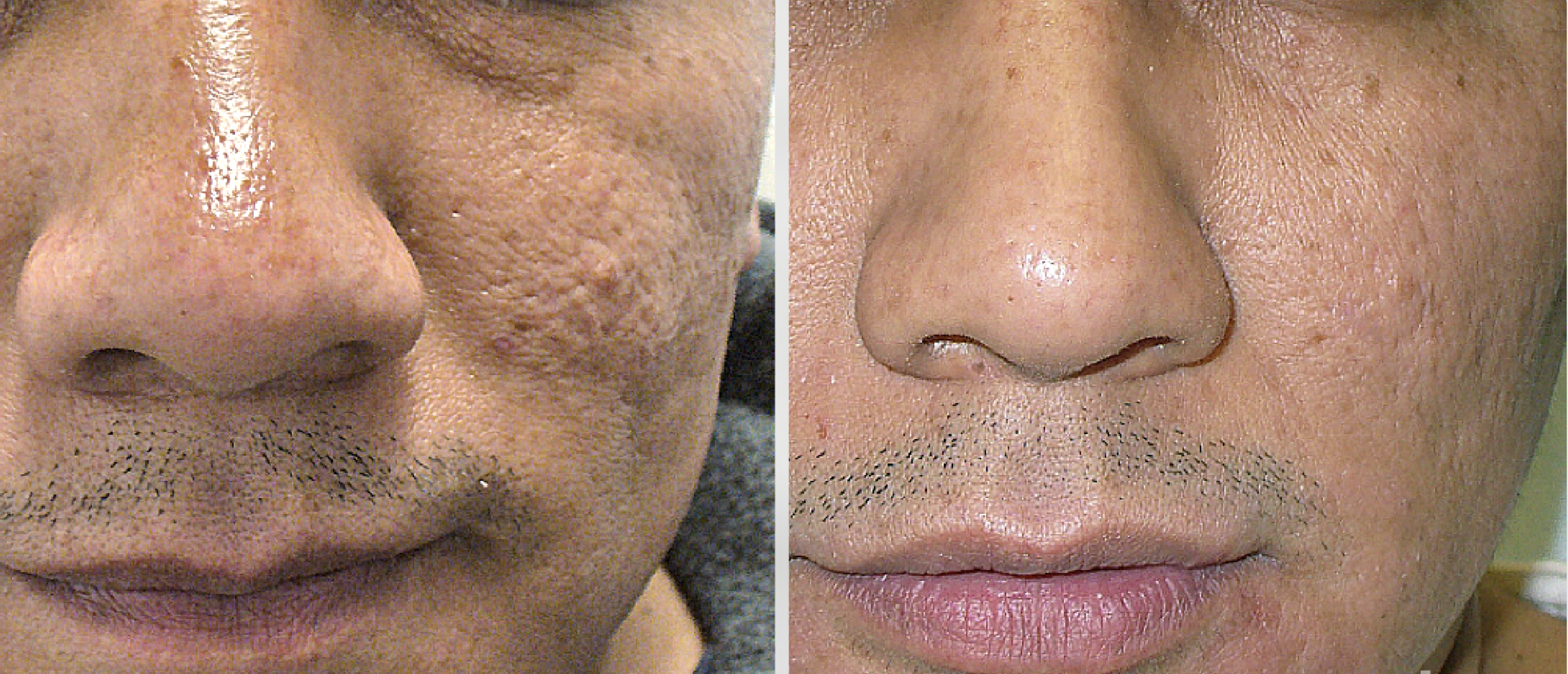
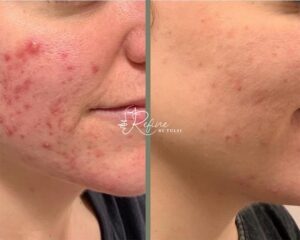
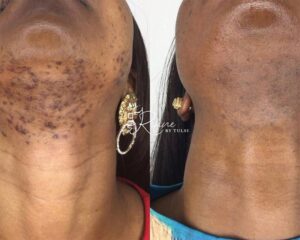
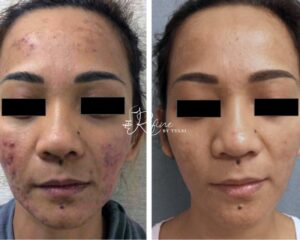
Acne scar treatment before & after
Results achieved by combining subcision, CO₂ resurfacing, RF microneedling, Filers, and laser therapy — across a full range of skin tones.
Acne scar treatment: quick facts
Cost depends on scar severity and the combination of treatments used. Membership plans and financing are available.
Book Now FinancingAcne scar treatment risks & side effects
Acne scar treatments are generally safe when performed by a physician, but they are real medical procedures. Dr. Kotecha reviews every risk with you before you decide.
- Temporary redness, swelling, or bruising — most pronounced after subcision and CO₂ laser
- Mild discomfort during treatment; numbing is used
- Temporary skin sensitivity or dryness during healing
- Risk of post-inflammatory hyperpigmentation, particularly in deeper skin tones — which is why device and depth selection matters
- Uneven results or under-correction, typically addressed with follow-up sessions
- Rarely, infection or scarring; strict aftercare reduces this risk
Scarring is improved, not erased. Realistic goals — meaningful smoothing and evenness rather than perfection — are the foundation of a satisfying result.

Meet your Chicago acne scar physician
Dr. Kotecha believes effective acne scar treatment goes beyond the surface. She assesses each patient's skin type, scar architecture, and aesthetic goals to build a plan that treats current concerns while supporting long-term skin health.
Board-certified in Internal Medicine and Aesthetic Medicine, she has invested specifically in technologies that are safe and effective for all skin types, including deeper skin tones — a population too often underserved in laser and scar treatment. Subcision and CO₂ resurfacing are performed by her personally.
More about Dr. KotechaAcne scar patient reviews
My acne has improved immensely.
She has so many years of experience in preventative medicine that I knew I was in good hands. Every interaction has been so warm and welcoming. I'm over the moon happy with my results.
My recovery has been smooth.
Dr. Tulsi is friendly, knowledgeable, and skilled. I'm getting microneedling and PRP done, and my recovery has been smooth.
The fact that Dr. Kotecha is an MD gave me full confidence.
She combines medical expertise with a compassionate approach to care. My results are exactly what I wanted — subtle and natural.
Acne scar treatment FAQ
Subcision is a minor in-office procedure in which a fine needle or blunt cannula is inserted beneath a rolling scar to release the fibrous bands tethering it downward. The area is numbed first, so most patients report pressure rather than pain. Expect bruising for roughly one to two weeks — it's the most visible downtime of any treatment we offer for scars, and also the only one that addresses tethering directly.
They solve different problems, and many patients need both. Subcision releases rolling scars pulled down from beneath; CO₂ laser resurfaces textured, boxcar, and ice-pick scarring from above. Resurfacing a tethered scar won't lift it, and releasing a tether won't smooth surface texture. Dr. Kotecha maps your scars first, then sequences the treatments with healing time between.
Most patients experience redness and mild peeling for five to ten days, depending on the depth of resurfacing selected. Applying exosomes immediately after treatment can support a faster, more comfortable recovery. Initial improvement appears once the skin heals, and collagen production continues for months afterward — so your skin keeps improving well past the visible healing period.
Yes, with the right device and the right settings. Deeper skin tones carry a genuine risk of post-inflammatory hyperpigmentation from aggressive lasers, which is why Dr. Kotecha has invested specifically in technologies safe across Fitzpatrick I–VI. Aerolase NeoClear® and Sylfirm X are frequently chosen for deeper tones, and pre-treatment priming plus conservative depth settings further reduce risk. This is a conversation to have in person.
Most patients need two to four sessions for optimal results, though this varies with scar severity and the combination used. Subcision often takes one to three sessions spaced four to six weeks apart. RF microneedling typically runs three to four sessions. CO₂ may be a single deeper pass or a staged series.
Collagen-building treatments produce durable improvement, and Bellafill® correction can last up to five years. Results from subcision are long-lasting once the bands are released and prevented from re-adhering. Ongoing skin health, sun protection, and occasional maintenance sessions preserve your outcome.
Honestly, no — scarring is meaningfully improved rather than erased. Most patients see substantial smoothing and evening of texture and tone with a well-sequenced plan. We'd rather set that expectation clearly at the start than oversell an outcome. Combination therapy consistently outperforms any single treatment.
Active acne should be well controlled before scar revision begins. Treating scars while breakouts are ongoing creates new scarring and complicates healing. If you're still breaking out, we'll address that first — sometimes with Aerolase, which treats active acne and scarring together.
Yes, and they usually should be. Subcision pairs with PRF or Bellafill®, CO₂ pairs with exosomes, and microneedling pairs with PRP. What matters is sequencing and spacing — combining treatments carelessly in one visit increases risk without improving results.
Let's map your scars.
Book a consultation with Dr. Kotecha and get an honest assessment of your scar type, your options, and what results you can realistically expect — at either Chicago location.
(618) 298-8574Medical disclaimer: This page is for general educational purposes and is not medical advice, diagnosis, or treatment. Subcision, CO₂ laser resurfacing, and injectable treatments are medical procedures performed only after an in-person evaluation, and are not appropriate for everyone. Downtime, session counts, and pricing shown are typical ranges and vary by individual. Acne scarring is improved rather than eliminated. Individual results vary. Please consult a qualified physician before beginning any treatment.