Peptides for Hair Growth: How GHK-Cu Supports Thicker Hair — and Why We Pair It With PRF
If your hair is thinning, you’ve probably discovered how crowded and confusing the market is — supplements, serums, devices, and a growing buzz around “peptides for hair.” Some of that buzz is hype. But one peptide has real science behind it and a genuine role in modern hair restoration: GHK-Cu, a copper peptide that supports the scalp, the follicles, and the collagen environment hair grows from.
Here’s the key thing most articles miss, though: peptides work best in combination, not alone. At Refine by Tulsi, GHK-Cu is a central part of our non-surgical hair restoration — but we deliberately pair it with PRF (platelet-rich fibrin), because the two work through complementary mechanisms and amplify each other. This guide explains how peptides support hair growth, what makes GHK-Cu special, and why the GHK-Cu + PRF combination is more powerful than either on its own.
Why Hair Thins in the First Place
Hair thinning is rarely one thing. Follicles miniaturize and slow their growth for several overlapping reasons — hormonal shifts (including after menopause), age-related decline, genetics, inflammation and poor scalp health, reduced blood flow to the follicles, and the general slowdown of the collagen and growth-factor environment the follicle depends on.
Because it’s multifactorial, the treatments that work best tend to address several of these mechanisms at once — which is exactly why single-ingredient approaches so often disappoint. (We break down the causes and the “act early” urgency in our guide on what to do when your hair is thinning.)
How Peptides Support Hair Growth
Peptides are short chains of amino acids that act as signaling molecules — they tell cells what to do. In the context of hair, the right peptides can help by signaling the follicle and improving the environment around it:
- Supporting the follicle’s growth phase — encouraging follicles to stay in or return to the active growing (anagen) phase rather than prematurely shifting to shedding
- Improving scalp and follicle health — a healthier scalp environment supports healthier growth
- Stimulating collagen and the extracellular matrix — the structural “soil” the follicle is rooted in
- Supporting blood supply and nutrient delivery — follicles are metabolically demanding and depend on good perfusion
- Reducing inflammation and oxidative stress — both of which contribute to follicle miniaturization
Of the peptides studied for hair, GHK-Cu is the standout — which is why it anchors our approach.
GHK-Cu: The Copper Peptide for Hair
GHK-Cu (glycyl-L-histidyl-L-lysine copper) is a naturally occurring peptide-copper complex your body produces in decreasing amounts as you age. It’s one of the most extensively studied regenerative peptides overall, and it has specific relevance to hair. Research and clinical use associate GHK-Cu with the ability to:
- Support hair follicle size and growth signaling — associated with encouraging follicles toward the active growth phase
- Stimulate collagen and elastin production — rebuilding the healthy scalp matrix that follicles anchor into
- Improve scalp skin quality and thickness — a better foundation for growth
- Support blood vessel formation (angiogenesis) — improving the follicle’s blood and nutrient supply
- Reduce inflammation and provide antioxidant support — calming the follicle-hostile environment that accelerates thinning
- Aid tissue repair and regeneration — its broader regenerative signature, applied to the scalp
In short, GHK-Cu doesn’t just target the hair — it improves the terrain the hair grows from. That’s a meaningful distinction, and it’s part of why it pairs so well with a growth-factor treatment like PRF.
Why GHK-Cu, Specifically
Copper is a required cofactor for several enzymes involved in collagen cross-linking, elastin formation, and blood vessel development — all relevant to a healthy scalp and follicle. GHK-Cu delivers that copper in a bioavailable, signaling-active form, alongside the regenerative activity of the peptide itself. It’s not a random trend ingredient; it’s a well-characterized molecule with a clear biological rationale for hair.
The Refine Approach: Why We Combine GHK-Cu With PRF
This is where our hair restoration differs from a one-size serum. We deliberately pair GHK-Cu with PRF — and the reason is mechanistic, not marketing. The two treatments do different jobs, and together they cover more of the multifactorial problem than either can alone.
PRF (Platelet-Rich Fibrin)
Drawn from your own blood and concentrated, PRF delivers a rich payload of growth factors and a slow-release fibrin scaffold directly into the scalp. It signals follicles, supports blood supply, and jump-starts regeneration — using your body’s own healing biology, with a sustained release that improves on older PRP.
GHK-Cu
The copper peptide improves the environment the follicle grows in — stimulating collagen, supporting the scalp matrix, aiding blood vessel formation, and calming inflammation. It extends and complements the growth-factor signal from PRF with ongoing regenerative support.
Think of it this way: PRF delivers a concentrated burst of your own growth factors to activate the follicles, while GHK-Cu improves and maintains the scalp terrain that lets those follicles thrive. One activates; the other builds the environment. Growth factors work better in healthy tissue — and GHK-Cu helps create that healthy tissue. That complementary action is why we combine them rather than choosing one.
1 + 1 = More Than 2
Because hair thinning is multifactorial, treatments that hit multiple mechanisms tend to outperform single-mechanism ones. PRF addresses growth-factor signaling and follicle activation; GHK-Cu addresses the collagen matrix, blood supply, and inflammation. Layered together, they cover more of the problem — which is the whole philosophy behind our multi-modal hair restoration program.
Wondering if the GHK-Cu + PRF combination is right for your thinning? The earlier you act, the better the outcomes. Book a consultation at refinebytulsi.com/book — we’ll assess your scalp and hair and build a plan.
Where This Fits in Complete Hair Restoration
GHK-Cu + PRF is a powerful core, but for many patients it’s part of a broader, layered protocol. Our full non-surgical hair restoration can also incorporate:
- RF microneedling — creating micro-channels that both stimulate the scalp and enhance delivery of peptides and growth factors
- Exosome therapy — advanced regenerative signaling for appropriate candidates
- Medical-grade topicals and nutritional support — supporting follicle health from multiple angles
- Hormonal assessment — because hormonal shifts (especially post-menopause) often drive thinning and should be addressed at the root
The right combination depends on your specific pattern, cause, and stage of thinning — which is exactly what a consultation determines. For the full science of how these modalities synergize, see our complete guide to multi-modal hair restoration.
What a GHK-Cu + PRF Course Looks Like
We evaluate your thinning pattern, likely causes, and candidacy — and check whether hormones or other factors need addressing at the root.
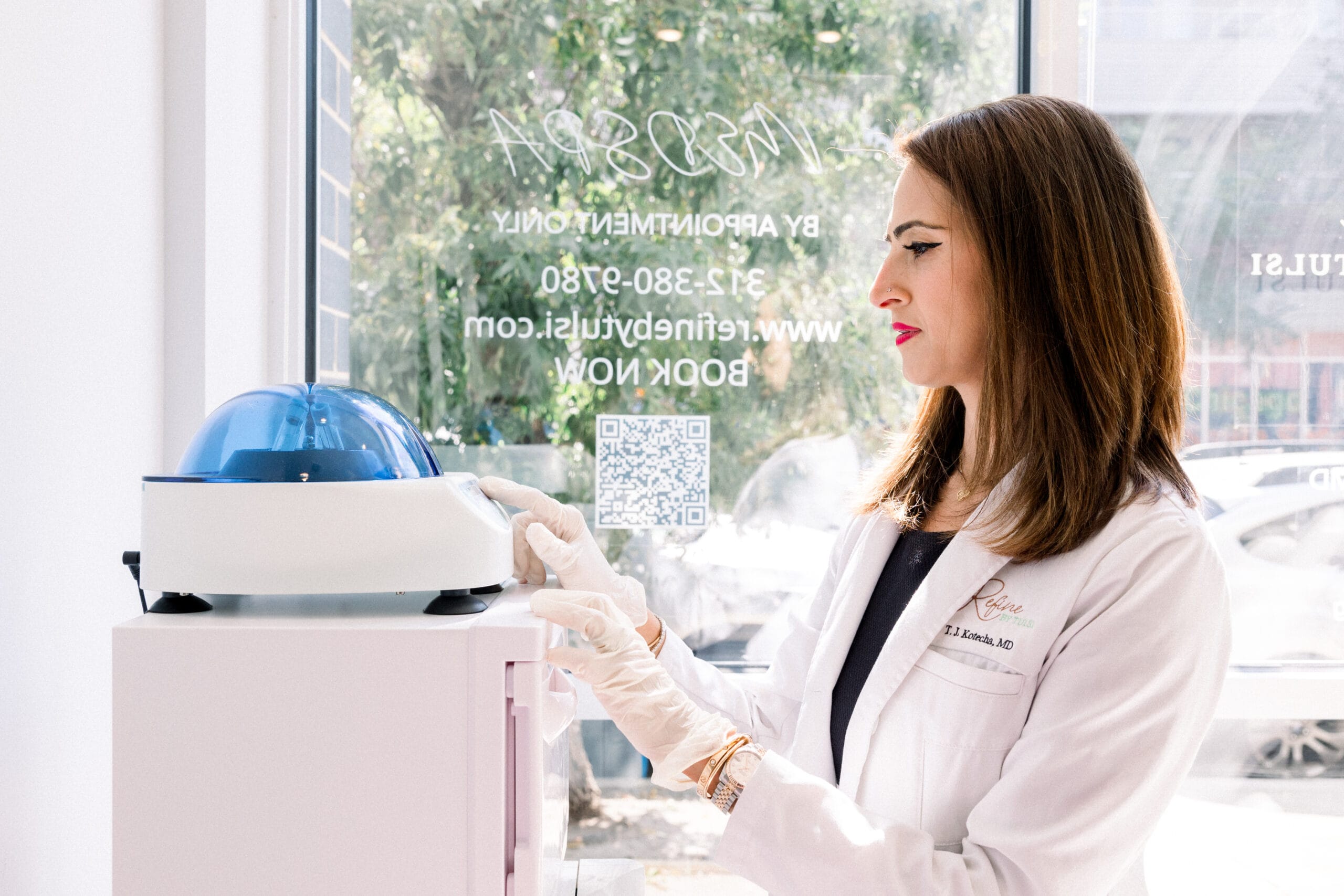
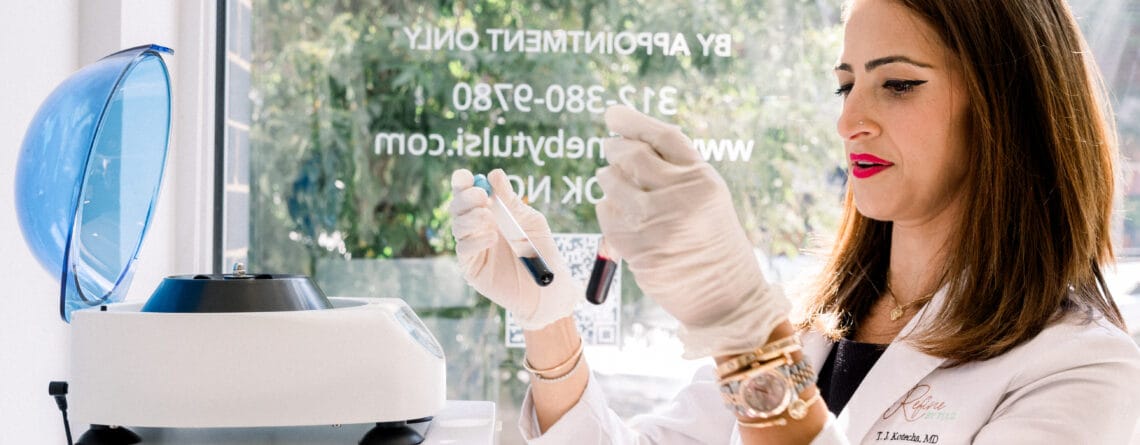
A simple blood draw, then concentration into platelet-rich fibrin — your own growth factors, ready to deliver to the scalp.
PRF and GHK-Cu delivered to the scalp, often alongside microneedling to enhance penetration and stimulate the follicles directly.
Hair restoration works over a series of sessions spaced across several months, with maintenance to sustain results. Hair grows slowly — patience and consistency are part of the process.
Honest Expectations
No credible provider can promise to regrow a full head of hair, and results vary by person, cause, and how early you start. What the GHK-Cu + PRF approach reliably offers is support for healthier, thicker, stronger hair by improving follicle activity and scalp health — best when started early, before follicles are dormant. We describe what these treatments support, not guaranteed regrowth, and we’re honest at consultation about what’s realistic for you.
Who Is This For?
- Men and women noticing early to moderate thinning — the earlier, the better the response
- Those who want a non-surgical, natural approach that uses their own biology (PRF) plus regenerative peptide support
- Women experiencing post-menopausal or hormonal thinning (often best paired with hormonal assessment)
- Anyone wanting to preserve and strengthen the hair they have, not just chase regrowth after it’s gone
- Patients who’ve tried single-ingredient serums or supplements without much result and want a combination, physician-led approach
Real Patient Experiences
My part was widening and I was starting to panic. I’d tried every serum on the market. Dr. Kotecha explained why combining PRF with the GHK-Cu peptide made more sense than any single product — one activates the follicles, the other improves the scalp. After a few months my hair felt thicker and the shedding slowed dramatically. I only wish I’d started sooner.
After menopause my hair got noticeably thinner and finer. What I appreciated was that Dr. Kotecha didn’t just treat the scalp — she checked my hormones too, then built a plan around PRF and GHK-Cu. Treating it from multiple angles is what finally made a difference after years of frustration.
Frequently Asked Questions
Does GHK-Cu really work for hair?
GHK-Cu is one of the better-studied peptides for skin and scalp regeneration, associated with supporting follicle health, collagen, blood supply, and reduced inflammation. It’s not a miracle cure, and it works best combined with other modalities like PRF rather than alone. We’re honest about what it supports versus what it can’t guarantee.
Why combine GHK-Cu with PRF instead of using one?
They work through complementary mechanisms. PRF delivers a concentrated burst of your own growth factors to activate follicles; GHK-Cu improves the scalp terrain — collagen, blood supply, inflammation — that lets those follicles thrive. Because hair thinning is multifactorial, hitting it from two angles tends to outperform either alone.
Is PRF the same as PRP?
They’re related — both use your own blood — but PRF (platelet-rich fibrin) is a newer generation that includes a fibrin scaffold for slower, sustained release of growth factors, and is prepared without anticoagulant. Many providers consider PRF an improvement over traditional PRP for regenerative applications. Learn more on our PRF therapy page.
How many sessions will I need?
Hair restoration works over a series — typically several sessions spaced across a few months, followed by maintenance. Hair grows slowly, so results build gradually; consistency matters. Your specific plan depends on your pattern and stage of thinning, determined at consultation.
Is it safe? Any downtime?
Both PRF (from your own blood) and GHK-Cu have strong safety profiles under physician supervision. Expect minimal downtime — some scalp tenderness or redness for a day or so. Most patients return to normal activity right away.
When should I start?
As early as possible. These treatments support and revive active follicles far better than they revive long-dormant ones. If you’re noticing thinning, earlier intervention meaningfully improves your odds. See our guide on what to do when your hair is thinning.
The Bottom Line
Peptides have a real, science-backed role in hair restoration — and GHK-Cu leads the way, supporting follicle health, scalp collagen, blood supply, and a calmer, healthier growth environment. But its real power shows when it’s combined. At Refine by Tulsi, pairing GHK-Cu with PRF — your own growth factors plus regenerative peptide support — targets more of the multifactorial thinning problem than any single treatment can.
If your hair is thinning, the best time to act is early. Explore our full non-surgical hair restoration approach, and let’s build a plan around your hair.
Stronger, Thicker Hair Starts With the Right Combination
Book a consultation at our Lincoln Park or Logan Square location. We’ll assess your thinning, check for root causes, and build a GHK-Cu + PRF hair restoration plan designed for your scalp.
About Dr. Tulsi Kotecha
Dr. Tulsi Kotecha is the founder and medical director of Refine by Tulsi, a physician-led medical spa with locations in Lincoln Park and Logan Square, Chicago. She specializes in non-surgical hair restoration, PRF therapy, peptide therapy, and integrative longevity medicine. Learn more about Dr. Kotecha.
This article is for educational purposes and does not constitute medical advice. Peptide, PRF, and hair restoration therapies should be administered under the guidance of a qualified physician. Individual results may vary. Statements regarding peptides have not been evaluated as treatment for any specific disease.