Peptide Therapy After GLP-1 Weight Loss: Protecting Muscle, Skin, and Your Results
Here’s what most people don’t realize about GLP-1 weight loss: you’re not only losing fat. A meaningful portion of what comes off is lean muscle mass — and alongside it, collagen, skin firmness, and sometimes the metabolic resilience that keeps weight off long-term. The scale celebrates. Your body composition tells a more complicated story.
This is the under-discussed side of semaglutide and tirzepatide weight loss. Rapid loss without the right support can leave you lighter but softer, more deflated, and metabolically slower than you’d like — which also makes regaining weight easier. Peptide therapy is one of the most useful tools for countering this, and for restoring what aggressive weight loss takes.
At Refine by Tulsi, we use physician-supervised peptide therapy as part of a coordinated medical weight loss and recovery approach. This guide explains what GLP-1 loss costs beyond fat, and how the right peptides help you protect muscle, restore skin, and hold onto your results.
The Problem: GLP-1 Loss Isn’t All Fat
When you lose weight rapidly — as GLP-1 medications often produce — your body doesn’t selectively burn only fat. Studies of significant weight loss consistently show that a substantial share of the weight lost comes from lean mass: muscle, and the supporting tissues.
Why this matters beyond aesthetics:
- Muscle is metabolically active. Losing it lowers your resting metabolic rate — making weight easier to regain and harder to keep off once you adjust or stop the medication.
- Muscle supports your structure. On the face and body, lean mass contributes to a firm, supported appearance. Losing it worsens the deflated, “Ozempic face” and loose-skin look.
- Collagen and skin suffer too. Rapid loss outpaces the skin’s ability to adapt, and collagen decline leaves skin looser and less resilient.
- Recovery and energy can dip. Aggressive dieting and nutrient shifts can leave you feeling flat, with slower recovery.
The Goal Isn’t to Stop — It’s to Support
None of this means GLP-1 medications are bad or that you should stop. They’re delivering real health benefits. The point is that how you lose the weight matters enormously — and supporting your body through it (protein, resistance training, and targeted peptides) protects your muscle, your skin, and your long-term results. Rapid, unsupported loss is the problem, not the medication itself.
How Peptides Help After GLP-1 Weight Loss
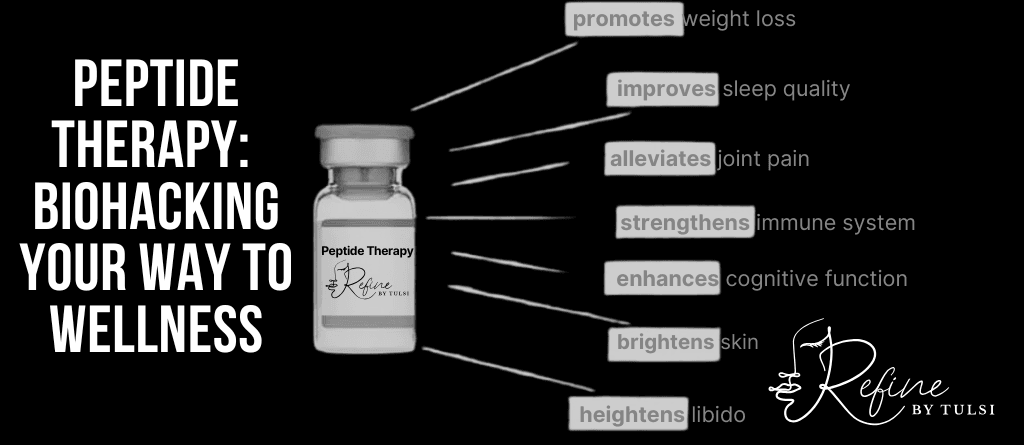
Peptides are signaling molecules that tell specific cells to do specific things. After GLP-1 weight loss, the right peptides target exactly the systems that rapid loss depletes — muscle, collagen, recovery, and metabolic support.
CJC-1295 / Ipamorelin
A growth hormone secretagogue combination that supports your body’s own GH production — which helps preserve and build lean muscle, supports fat metabolism, and improves recovery. Directly counters the lean-mass loss that GLP-1 weight loss can cause.
GHK-Cu
A copper peptide and one of the most studied collagen stimulators. Signals collagen and elastin production to help restore the skin firmness and quality that rapid weight loss deflates — supporting both facial skin and the loose skin left on the body.
BPC-157 & TB-500
A regenerative pairing that supports tissue repair, reduces inflammation, and supports gut health — helpful when aggressive dieting and rapid change have left recovery sluggish and the gut stressed. Supports the return to active training that protects muscle.
Supporting Therapies
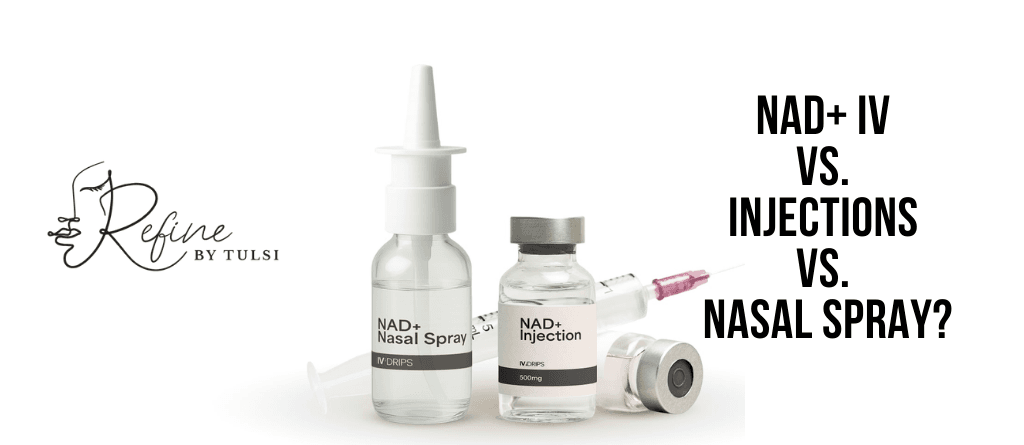
Peptides work best alongside the foundations — adequate protein, resistance training, and often NAD+ and IV nutrient support to restore the energy, recovery, and metabolic resilience that aggressive loss can blunt.
On a GLP-1 and worried about losing muscle — or already feeling the effects? Book a consultation at refinebytulsi.com/book. We’ll assess your body composition and build a supportive peptide and recovery plan.
The Muscle-Preservation Priority
Of everything peptides can do post-GLP-1, protecting lean muscle is the most important — because muscle loss is both an aesthetic problem (a softer, less-toned body) and a metabolic one (a slower metabolism that makes maintenance harder). Growth-hormone-supporting peptides like CJC/Ipamorelin, used alongside the two non-negotiable foundations, help preserve the muscle that aggressive weight loss threatens:
- Adequate protein — the single most important dietary factor for preserving lean mass during weight loss
- Resistance training — the signal that tells your body to keep its muscle while losing fat
- GH-supporting peptides — amplifying the muscle-preserving, recovery, and body-composition effects on top of those foundations
Peptides don’t replace protein and training — they work with them. Anyone offering a peptide as a shortcut around the fundamentals is overselling. The combination is what protects your body composition and your long-term results.
Peptides + Aesthetics: The Complete Post-GLP-1 Picture
Peptides are the internal half of post-GLP-1 recovery. They pair naturally with the external, aesthetic treatments that address what’s already visible:
- GHK-Cu + RF microneedling / iLaser — internal collagen support amplifying external skin tightening
- Muscle preservation + biostimulators and filler — supporting structure from within while restoring volume from without
- Recovery peptides + overall plan — helping you return to the training that protects your results
This inside-plus-outside approach is the full post-GLP-1 roadmap — and it’s exactly why coordinating weight loss, peptides, and aesthetics under one physician produces better results than piecing them together separately.
Why This Must Be Physician-Supervised
Peptides are bioactive signaling molecules, not supplements — and the online “research chemical” market is unregulated and often impure. Post-GLP-1 especially, where your body is already under metabolic stress, supervision matters:
- Verified, pharmaceutical-grade sourcing — not unverified online vials
- Correct dosing matched to your labs and body composition
- Health-history review and monitoring — including any interactions with your GLP-1 and other medications
- Integration — coordinated with your weight management, nutrition, and aesthetics
We cover this fully in our guide on why physician-supervised peptide therapy should be non-negotiable. With bioactive compounds and a body in transition, supervision isn’t optional — it’s what makes the therapy safe and effective.
Using peptides you bought online alongside your GLP-1? Bring them to a consultation at refinebytulsi.com/book. We’ll assess them honestly and transition you to verified, monitored therapy.
Real Patient Experiences
I lost the weight on semaglutide but I was shocked how much muscle tone I lost with it — I looked soft and deflated despite being lighter. Dr. Kotecha put me on CJC/Ipamorelin, bumped my protein, and got me resistance training. Over a few months I actually looked athletic for the first time, not just thinner. Protecting the muscle changed everything.
My skin took the hit — crepey and loose after the weight came off. Dr. Kotecha combined GHK-Cu peptide with RF microneedling, and the difference in my skin’s firmness over a few months was real. Treating it from the inside and outside at the same time is what did it.
Frequently Asked Questions
Do GLP-1 medications really cause muscle loss?
Rapid weight loss of any kind — including from GLP-1 medications — typically includes a meaningful portion of lean mass, not just fat. This is well-documented for significant weight loss generally. The good news is that it’s largely preventable with adequate protein, resistance training, and supportive therapies like GH-supporting peptides.
Can peptides be used while I’m still on my GLP-1?
Yes, under physician supervision. In fact, using muscle-preserving and skin-supporting peptides during your weight loss — not just after — is often the better strategy, helping prevent muscle and skin loss rather than correcting it later. We review your full medication list and coordinate everything.
Will peptides help me keep the weight off?
Indirectly, yes — by helping preserve metabolically active muscle, which supports your resting metabolic rate and makes maintenance easier. Peptides aren’t a weight-loss drug themselves; their role here is protecting the body composition and metabolic resilience that help you hold your results.
Which peptide is most important after GLP-1 weight loss?
For most patients, the growth-hormone-supporting combination (CJC/Ipamorelin) for muscle preservation is the priority, with GHK-Cu for skin. But the right protocol depends on your body composition, goals, and labs — determined at consultation.
Do I still need protein and exercise if I’m on peptides?
Absolutely — they’re the foundation, and peptides amplify them rather than replace them. Adequate protein and resistance training are the two most important things you can do to preserve muscle during weight loss. Peptides work best layered on top of those fundamentals.
The Bottom Line
GLP-1 weight loss costs more than fat — it can take muscle, collagen, skin firmness, and metabolic resilience with it. Physician-supervised peptide therapy helps counter this: GH-supporting peptides (CJC/Ipamorelin) to preserve lean muscle, GHK-Cu to restore skin and collagen, and regenerative peptides to support recovery — all working alongside protein, training, and the right aesthetic treatments.
At Refine by Tulsi, we coordinate peptides with your weight loss and aesthetics so you keep the results you worked for — lighter, but strong, firm, and resilient, not soft and deflated.
Keep the Weight Loss. Keep Your Strength.
Book a consultation at our Lincoln Park or Logan Square location. We’ll assess your body composition and build a physician-supervised peptide and recovery plan to protect your muscle, skin, and results.
About Dr. Tulsi Kotecha
Dr. Tulsi Kotecha is the founder and medical director of Refine by Tulsi, a physician-led medical spa with locations in Lincoln Park and Logan Square, Chicago. She coordinates medical weight loss with physician-supervised peptide therapy and aesthetics for complete, lasting results. Learn more about Dr. Kotecha.
This article is for educational purposes and does not constitute medical advice. Weight loss medications and peptide therapy should be administered under the guidance of a qualified physician. Individual results may vary. Statements regarding peptides have not been evaluated as treatment for any specific disease. Figures cited are general estimates from weight-loss research and vary by individual.