GLP-1 medications have changed the conversation around weight loss—for the better. We’re seeing patients achieve meaningful, sustained fat loss that once felt impossible. But with rapid or significant weight reduction comes a new and very real concern we’re seeing daily in clinic:
Loose, crepey, deflated skin – especially in the face, neck, and body and an aged appearance sometimes called “Ozempic face.”
This isn’t failure. It’s physiology. Fat loss happens faster than your skin’s ability to retract, particularly if collagen and elastin were already declining due to age, stress, or genetics. The good news? This is treatable.
Today’s aesthetic tools go beyond temporary fixes. With advanced technologies like iLaser shrink-wrapping and collagen-stimulating injectables such as Sculptra and Radiesse, we can address both skin laxity and volume loss in a way that looks natural, balanced, and long-lasting.
Understanding What Happens After Rapid Weight Loss
Rapid fat loss affects the face in two key ways:
- Volume loss — Facial fat pads that provide youthful structure shrink, especially in the cheeks, temples, and around the eyes.
- Skin laxity — As fat deflates, the overlying skin can appear loose because collagen and elastin networks were already declining with age, which may accelerate the appearance of sagging.
This combination can make even a younger patient look older than they are. That’s why strategies that only replace volume, like traditional fillers, can help somewhat, but don’t fully address the underlying structural change.
iLaser “Shrink-Wrapping”: A New Collagen-Driven Approach
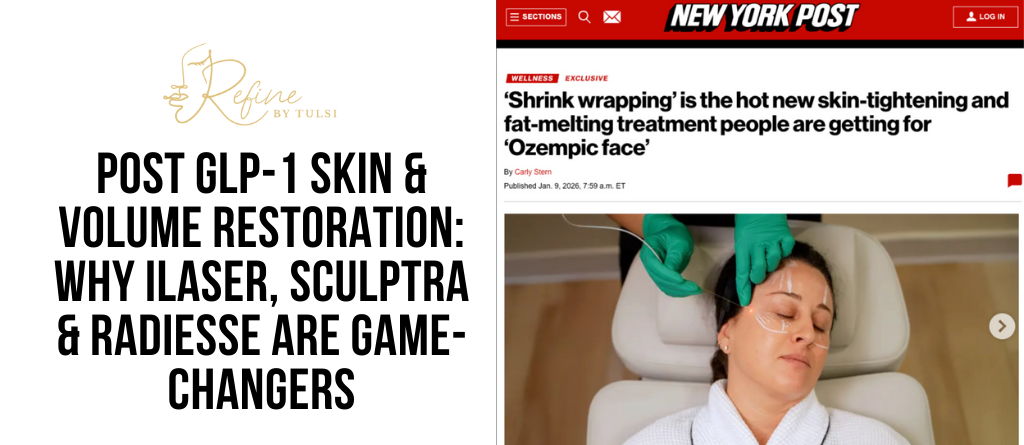
A buzzworthy, single-session treatment gaining traction is “shrink-wrapping” with iLaser, a laser device that applies controlled heat to the connective tissue and skin, stimulating collagen and elastin while also targeting superficial fat.
Practitioners describe the effect as giving the face a new layer of internal shapewear – essentially tightening the superficial fascia and connective tissue that supports facial structure.
Key points about iLaser shrink-wrapping:
- Single treatment: Most patients need just one session, with noticeable improvement within a week.
- Collagen stimulation: Heat trauma from the laser jump-starts collagen and elastin remodeling for gradual tightening.
- Less invasive than surgery: iLaser offers an attractive alternative for patients not ready for a facelift or surgical contouring.
This type of targeted thermal therapy works particularly well for mild to moderate laxity or for patients who have lost a noticeable amount of facial support but aren’t candidates for surgical lifting.
Sculptra: Collagen Biostimulation for Volume & Structure
While iLaser tightens skin at the connective tissue level, Sculptra plays a complementary role by stimulating the body’s own collagen production to rebuild volume from within.
Sculptra is a poly-L-lactic acid (PLLA) injectable that doesn’t simply “fill” – it encourages new collagen growth over time.
Why Sculptra is ideal after GLP-1:
- Structural support: It restores deeper facial volume in areas like the temples, cheeks, and jawline.
- Natural-looking results: Because it works gradually, the outcome is subtle and more harmonious with your anatomy.
- Long-lasting: Results can last up to 2 years with proper maintenance.
Sculptra is especially effective when combined with other modalities because it lays a collagen foundation that allows the skin to better withstand tightening and contouring.
Radiesse: Immediate Volume + Collagen Boost
Radiesse offers a unique advantage: it provides immediate structural support while also stimulating long-term collagen production.
It uses calcium hydroxylapatite (CaHA) microspheres suspended in a gel to:
- Lift and define contours such as the cheeks and jawline
- Provide instant volume reinforcement
- Encourage fibroblast activity for collagen remodeling over time
Radiesse vs Sculptra:
- Radiesse: Immediate lift with additional collagen stimulation, typically lasting ~12–18 months.
- Sculptra: More gradual, subtle build-up of your natural collagen, often lasting ~2 years.
The two can be used together or in sequence – Radiesse giving immediate structure, while Sculptra builds long-term support.
The Power of Combination Therapy
The most effective post-GLP-1 aesthetic plans don’t rely on one treatment — they strategically combine:
- iLaser shrink-wrapping for collagen stimulation and soft tissue tightening
- Sculptra to rebuild volume and deep support
- Radiesse to deliver immediate structural improvement plus lasting collagen remodeling
When combined, these therapies help restore natural contours, tighten lax skin, and rebuild foundational support – all without surgery.
When to Consider These Treatments
You might be a great candidate for this approach if:
- You notice hollowing cheeks, temples, or under-eye areas
- You see jawline loosening or sagging
- You want non-surgical improvement with lasting results
- You’re past the preventative stage but not ready for surgical lifting
Each plan should be personalized based on your anatomy, aging pattern, and aesthetic goals.
Final Thoughts
Rapid weight loss through GLP-1 medications is a remarkable health achievement – but it can come with aesthetic challenges that shouldn’t require surgery to look refreshed and balanced. Integrated treatments like iLaser shrink-wrapping, Sculptra, and Radiesse let you rebuild structure and tighten skin in a way that feels natural, gradual, and tailored to you.
Your face is more than “fat + skin.” It’s a complex architectural structure, and thoughtful, evidence-based treatments respect that.
Lost Weight on GLP-1? Let’s Tighten + Rebuild.
Post-GLP-1 changes often require two things: skin tightening and collagen rebuilding. Our physician-led plan may combine iLaser “shrink-wrapping” with Sculptra and/or Radiesse for natural structure, firmness, and definition—without an overfilled look.
Schedule Your Post-GLP-1 ConsultationPhysician-led • iLaser + Biostimulators • Natural, structural results
Frequently Asked Questions: Skin Tightening After GLP-1 Weight Loss
What is “Ozempic face”?
“Ozempic face” is a term used to describe facial changes that can occur after rapid weight loss from GLP-1 medications. It typically involves a combination of volume loss and skin laxity, leading to hollow cheeks, softened jawlines, and a more tired or aged appearance.
Why does skin become loose after GLP-1 weight loss?
GLP-1 medications accelerate fat loss, but the skin does not tighten at the same pace. Collagen and elastin naturally decline with age, so when facial fat diminishes quickly, the skin may not fully retract on its own—resulting in sagging or crepey texture.
Will my skin tighten naturally over time?
Some mild tightening can occur, but significant laxity usually requires collagen-stimulating treatments. Weight loss alone does not stimulate new collagen production, which is why targeted skin-tightening therapies are often needed after GLP-1 use.
What is iLaser “shrink-wrapping” and how does it work?
iLaser is an advanced laser treatment that delivers controlled heat to deeper layers of the skin, stimulating collagen and elastin while tightening the connective tissue. The effect is often described as “shrink-wrapping” because it helps firm and support the skin from within.
How does Sculptra help after GLP-1 weight loss?
Sculptra is a collagen-stimulating injectable that gradually rebuilds volume and structural support by encouraging your body to produce its own collagen. It is especially helpful for facial deflation and works well alongside skin-tightening treatments.
What is the difference between Sculptra and Radiesse?
Sculptra works gradually by stimulating collagen over time, while Radiesse provides immediate structural support along with long-term collagen stimulation. The choice depends on whether you need instant contouring, gradual rebuilding, or a combination of both.
Can iLaser be combined with Sculptra or Radiesse?
Yes. Combining iLaser with collagen-stimulating injectables often produces the most natural and long-lasting results. iLaser tightens the skin, while Sculptra and Radiesse rebuild the underlying support structure.
Will fillers make my face look puffy after weight loss?
When used strategically, biostimulators like Sculptra and Radiesse are designed to restore structure—not create an overfilled look. Physician-led planning ensures balance, proportion, and natural outcomes.
When is the best time to address skin laxity after GLP-1?
The ideal time is during active weight loss or once your weight has stabilized. Early intervention leads to better collagen response, fewer treatments, and more refined results.
Am I a good candidate for skin tightening after GLP-1?
You may be a good candidate if you’ve noticed facial sagging, hollowing, or skin laxity after weight loss and want a non-surgical approach to restoring firmness and structure. A personalized consultation is the best way to determine the right plan.