Most people searching for facial balancing in Chicago aren’t looking for a dramatic change. They’re looking for something quieter — to look less tired in photos, to feel more defined along the jawline, to recognize themselves in the mirror again. Not a new face. Their own face, in harmony.
That distinction is the whole point. Facial balancing isn’t about adding volume everywhere — it’s about restoring structure, proportion, and harmony using precise, conservative treatment guided by anatomy. Done well, it uses far less product than most patients expect, and the result is so natural that no one can name what changed.
At Refine by Tulsi, with locations in Lincoln Park and Logan Square, facial balancing is performed from a medical, physician-led perspective — focused on long-term, natural outcomes rather than trend-driven filler. This guide explains what it actually is, how it works, and why the best results are the ones you’ll never notice.
What Facial Balancing Actually Means
Facial balancing is not a single procedure. It’s a comprehensive assessment of how your facial features relate to one another — and then a series of small, deliberate adjustments to bring those relationships back into proportion.
The face is read as a set of relationships, not isolated parts. When one structural relationship shifts, the entire face can feel different — even if you can’t pinpoint why:
- A nose can appear prominent because the chin lacks projection — not because the nose is large
- Under-eye hollows can look deeper because the midface has lost support — not because of the eyes themselves
- Lips can seem thinner because the lower-face structure has softened — not because the lips changed
This is why facial balancing so often produces an outsized effect from a small intervention. One subtle structural adjustment can soften several concerns at once. We go deeper on the nose example in our guide on how chin and cheek filler change your profile without rhinoplasty.
Why Faces Change Over Time — It’s Structural, Not Just Surface
Aging isn’t only about wrinkles. It’s structural and three-dimensional. Beneath the skin, four things change gradually over the decades:
- Bone support recedes — the facial skeleton literally remodels and contracts with age, removing the foundation the soft tissue rests on
- Fat pads descend and deflate — the deep facial fat that holds the skin taut migrates downward and shrinks, creating hollows above and heaviness below
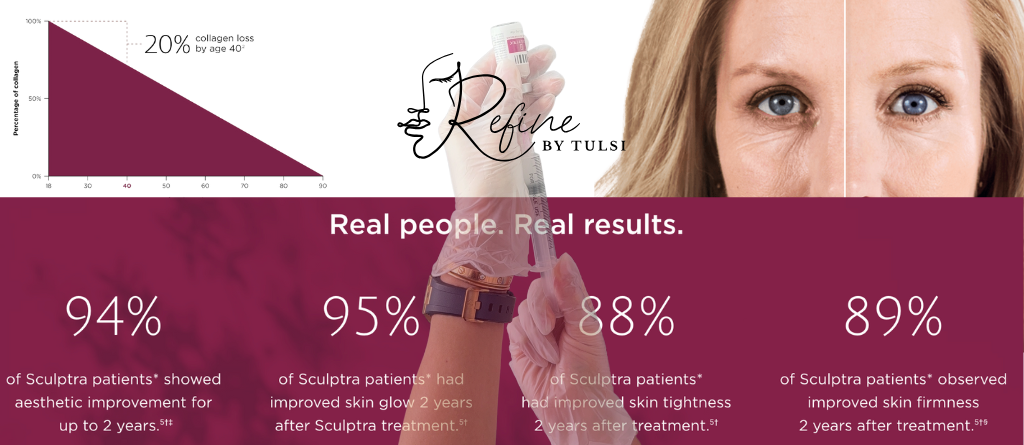
- Collagen and elastin decline — roughly 1% of collagen is lost per year after the mid-20s, accelerating sharply for women after menopause
- Definition softens — the crisp lines of the jaw and cheekbone blur as the structures beneath them weaken
This is why someone can have smooth, well-cared-for skin and still feel their face looks tired or less defined. The surface is fine — the architecture underneath has shifted. Facial balancing works by supporting that architecture, rather than masking surface changes. For deeper structural rebuilding, it often pairs with collagen-stimulating treatments like Sculptra and Radiesse.
The Areas Facial Balancing Addresses
Facial balancing is built from individual treatments, chosen and sequenced based on what your specific face needs. The most common building blocks:
Chin & Profile
A small amount of firm, structural filler at the chin can correct a recessed profile, sharpen the jaw-to-neck transition, and balance the relationship between chin, lips, and nose. Often the single most impactful adjustment.
Chin filler →Cheeks & Midface
Restoring lost cheek volume lifts the entire midface, softens nasolabial folds, supports the under-eye, and re-frames the face. The structural anchor of most balancing plans.
Cheek filler →Under-Eye / Tear Trough
Tired-looking hollows often improve indirectly once the midface is supported — and can be refined directly with conservative, carefully placed product when appropriate.
Under-eye treatments →Lips
In balancing, the lips are refined in proportion to the rest of the face — subtle definition and restoration, never inflation. Soft, low G-prime products keep results natural.
Lip filler →Jawline
Definition along the mandibular border restores a youthful, structured lower face — and for the right candidate, complements chin work for a complete profile.
Jawline & dermal fillers →Movement & Tension
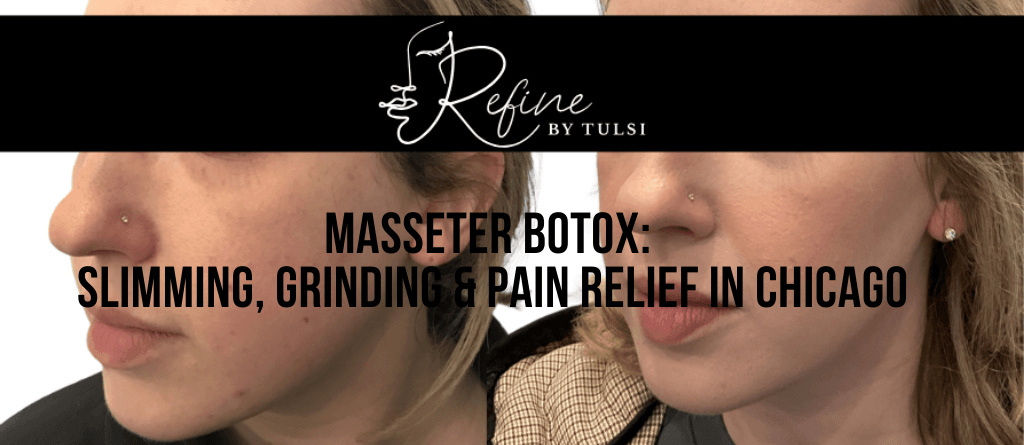
Sometimes balance is about softening, not adding — relaxing an overactive muscle or a heavy masseter to refine proportion. A neuromodulator, not filler.
Masseter Botox →Notice what isn’t on this list: “fill everything.” A balancing plan might use only two or three of these areas. The art is choosing the few that shift light, contour, and proportion across the whole face — explore the full menu of injectable treatments to see how they fit together.
The Science of “Natural”: Why Product Choice Matters
A huge part of why some facial balancing looks obvious and some looks invisible comes down to one technical concept: G-prime — the firmness, or “stiffness,” of a filler. Different areas of the face need different products, and matching them correctly is what separates structural support from puffiness.
- High G-prime (firm) fillers — like Voluma and Radiesse — provide projection and structure. Ideal for the chin, cheekbones, and jawline, where you want lift that holds its shape.
- Low G-prime (soft) fillers — like Volbella and Restylane Kysse — move naturally with the face. Essential for the lips and delicate areas, where firmness would read as stiff and unnatural.
- Dynamic fillers — like the RHA Collection — are designed to flex with expression, useful in animated areas of the face.
Using a firm structural filler in the lips, or a soft filler where you need projection, is one of the most common reasons results look “done.” Physician-led product selection is quietly one of the most important decisions in the entire process.
What Actually Happens During a Facial Balancing Appointment
Patients visiting our Lincoln Park or Logan Square clinics are often surprised that treatment doesn’t begin with injections. It begins with looking and listening.
We start with conversation: What concerns you most in photos? When did you first notice the change? What still feels completely like you? The goal isn’t transformation — it’s recognition.
Careful observation from the front, in profile, and in motion — how your face moves when you speak and smile, and how light and shadow fall across your contours. Balance only makes sense in context.
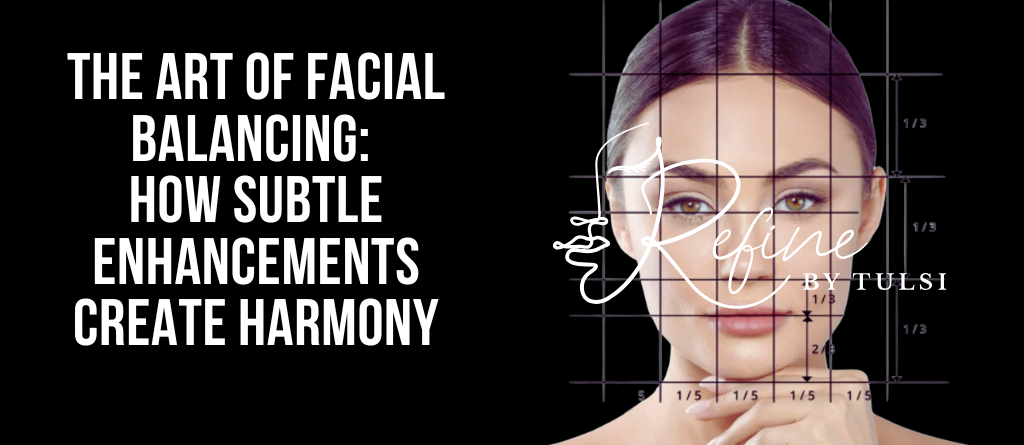
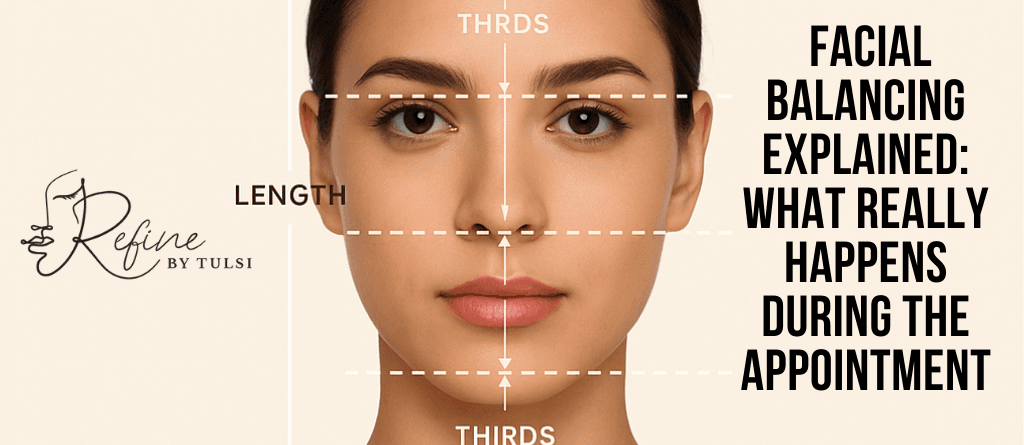
We evaluate the relationships that drive perception: chin projection relative to lips, jawline relative to cheeks, under-eye relative to midface, and overall facial symmetry and thirds.
A small, deliberate first treatment — usually less product than you expect — placed precisely where it shifts the most across the whole face.
We let everything settle, then reassess at a follow-up. Refinement is added only if needed — never all at once. This staged approach is how we protect natural movement and prevent the overfilled look.
Curious what your face actually needs — and what it doesn’t? Book a facial balancing consultation at refinebytulsi.com/book. We’ll assess your proportions and build a conservative, staged plan around your real anatomy.
Why Natural Results Look “Invisible”
Well-performed facial balancing rarely looks like anything was done. Instead of “what did you get?”, patients hear:
- “You look rested.”
- “You look refreshed.”
- “Did you change something?”
They can’t identify what changed — which is exactly the sign of success. The face simply fits together again. That invisibility is not an accident; it’s the product of restraint, anatomical precision, correct product selection, and a willingness to stop before the face tips into looking “filled.”
Is Facial Balancing Done in One Visit?
Rarely — and that’s intentional. A physician-guided plan almost always unfolds in stages: a conservative initial treatment, a period of healing and reassessment, then gradual refinement only if needed. This staged approach protects three things that one-visit, over-treated results sacrifice:
- Natural facial expression — you should still look fully like yourself when you talk, smile, and emote
- Long-term structural harmony — building gradually lets us see how each change reads before adding more
- Prevention of the overfilled look — the single most common regret in aesthetics, and the easiest to avoid by going slow
The Principle We Treat By
You can always add more. You cannot easily un-fill a face that’s been overdone. So we start conservative, reassess, and refine — every time. The most beautiful balancing results are built, not rushed.
Who Is a Good Candidate?
Facial balancing is ideal for patients noticing the early, structural signs of change rather than severe sagging:
- Tired-looking under-eyes
- A softening jawline or recessed chin
- Mild facial asymmetry
- Loss of cheek support and midface volume
- A profile that feels slightly “off” without an obvious cause
- Subtle aging — the sense of looking tired despite good skin
Earlier, conservative treatment almost always produces the most natural results. The patients happiest with their balancing are usually the ones who came in when the changes were still subtle — and who let us address structure before significant volume was lost.
Why Physician-Led Facial Balancing Matters
Injectables are widely available. True facial balancing is not the same thing as being able to inject — it requires medical judgment. The expertise lives in knowing:
- Where not to inject — restraint is a skill, and the most important areas are often the ones left untouched
- When to stop — recognizing the point of harmony before the face tips into “filled”
- How your face will continue to age — so today’s treatment supports, rather than fights, tomorrow’s changes
- The anatomy of every skin tone and facial structure — balance is universal, but the technique is individual
At Refine by Tulsi, every plan is designed by Dr. Tulsi Kotecha, an MD, from a long-term facial-architecture perspective — never short-term volume. That medical foundation is what makes conservative, natural, lasting results possible.
What Our Facial Balancing Patients Say
I came in convinced I needed a lot of work. Dr. Kotecha looked at my whole face and said I really only needed a little structure in my chin and cheeks. One subtle treatment and my whole face looked more rested. My friends kept asking if I’d been on vacation. No one guessed I’d had anything done — which was exactly what I wanted.
I’d had filler elsewhere before and always felt like I looked a little “done.” Dr. Kotecha’s approach was completely different — conservative, staged, and focused on proportion instead of just adding volume. For the first time my results look like me, just refreshed. She actually talked me out of treating areas I thought I needed.
Frequently Asked Questions
How much product does facial balancing require?
Usually less than patients expect. Because the goal is structural proportion rather than volume, a plan might use only two or three areas. The art is precision — placing a small amount exactly where it shifts light and contour across the whole face.
Will facial balancing change how I look?
Not in the way people fear. The goal is recognition, not transformation — restoring your face’s natural harmony so you look rested and like yourself, not different. Well-done balancing is almost invisible; people notice you look refreshed without being able to say why.
How long do results last?
It depends on the products used. Hyaluronic acid fillers like Voluma typically last 12–18 months in structural areas; lip fillers 6–12 months. Collagen-stimulating treatments like Sculptra can last 2 years or more. We build a maintenance plan around your specific treatments.
Is it painful, and is there downtime?
Most patients tolerate treatment comfortably with topical numbing, and our fillers contain lidocaine. Expect mild swelling or occasional bruising for 24–72 hours; most people return to normal activities right away. Final results settle around two weeks.
Can facial balancing fix a nose I don’t like?
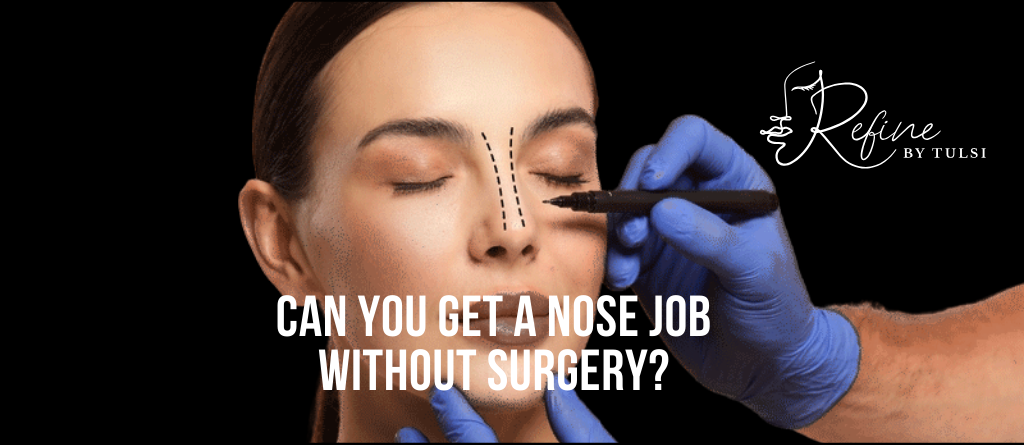
Often, yes — indirectly. A recessed chin or flat cheeks can make the nose look larger than it is. Balancing those structures frequently resolves the concern without touching the nose. Where the nose itself needs refinement, liquid rhinoplasty can complement the plan. More in our profile guide.
Is facial balancing for women only?
Not at all. Structural definition — jawline, chin, profile — is among the most requested treatments for our male patients, tailored to masculine proportions. Balancing applies to every face.
The Final Thought
The best facial balancing results are almost invisible. No dramatic reveal. No obvious change. Only the quiet feeling that everything fits again — that you look like yourself, rested and in harmony.
In modern aesthetics, that quiet return to harmony is often the most meaningful outcome of all. At Refine by Tulsi in Lincoln Park and Logan Square, that’s the only kind of result we’re interested in.
Ready to Feel Like Yourself Again?
Book a physician-led facial balancing consultation at our Lincoln Park or Logan Square location. We’ll assess your proportions, tell you honestly what you do — and don’t — need, and build a conservative plan around your face.
About Dr. Tulsi Kotecha
Dr. Tulsi Kotecha is the founder and medical director of Refine by Tulsi, a physician-led medical spa with locations in Lincoln Park and Logan Square, Chicago. She specializes in advanced facial balancing, injectable artistry, non-surgical rhinoplasty, and integrative longevity medicine, with a conservative, anatomy-first philosophy and expertise across diverse skin tones and facial structures. Learn more about Dr. Kotecha.
This article is for educational purposes and does not constitute medical advice. Injectable treatments should be administered under the guidance of a qualified physician. Individual results may vary. A consultation is required to determine candidacy.