
Menopausal Hair Loss Before & After
Non-Surgical Hair Restoration Before & After for Menopausal Hair Loss
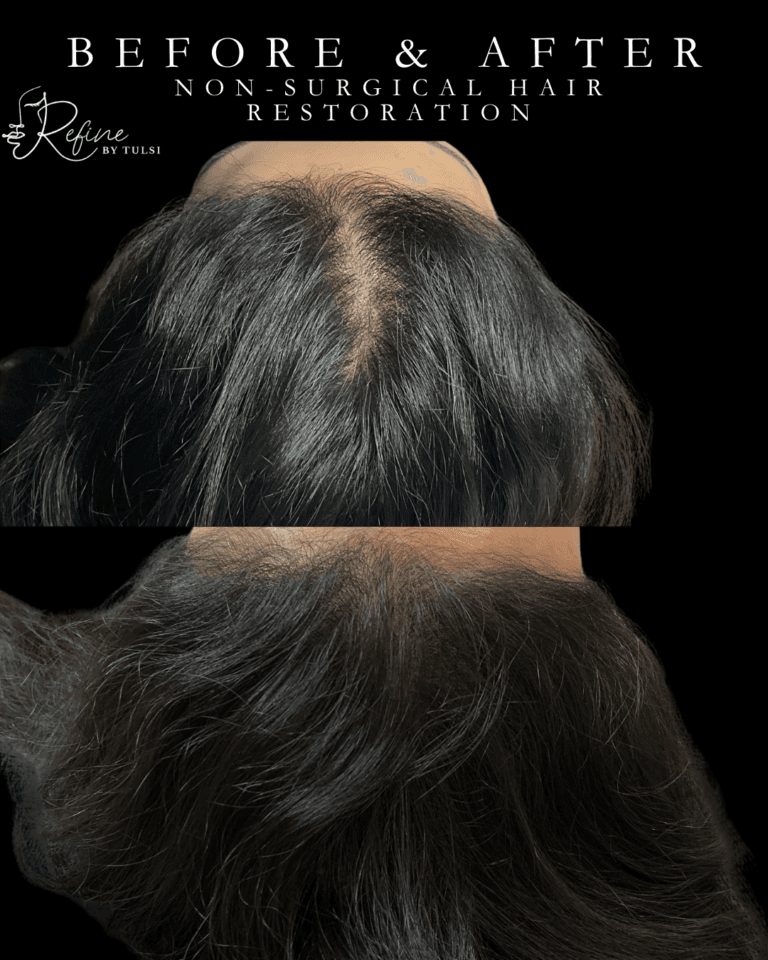
This before and after showcases a patient treated at Refine by Tulsi for menopausal hair loss, a common but often under-addressed cause of hair thinning in women during perimenopause and menopause.
The patient presented with diffuse thinning along the central part and crown, consistent with hormone-related hair loss, where declining estrogen, progesterone, and relative androgen sensitivity disrupt the normal hair growth cycle.
Following a personalized, physician-led non-surgical hair restoration protocol, the results demonstrate improved hair density, reduced scalp visibility, and healthier, fuller-appearing hair—without surgery or hair transplantation.
Understanding Menopausal Hair Loss
Hair loss during menopause is multifactorial and often driven by:
Declining estrogen and progesterone levels
Relative increase in androgen activity at the hair follicle
Shortened anagen (growth) phase of the hair cycle
Reduced scalp blood flow and follicular signaling
Unlike genetic hair loss alone, menopausal hair thinning requires a medical and regenerative approach, not just topical solutions.
Treatments Used in This Hair Restoration Case
This patient underwent a non-surgical, regenerative hair restoration treatment plan, designed and supervised by Dr. Tulsi Kotecha, with a focus on follicular stimulation, scalp health, and hormonal context.
The treatment approach included:
Regenerative scalp therapy to stimulate dormant hair follicles
Growth factor–based stimulation to support follicular signaling and prolong the growth phase
Improved scalp circulation and nutrient delivery, essential for menopausal hair recovery
Medical oversight to ensure hair loss triggers were properly identified and addressed
This protocol is commonly combined with therapies such as PRP / PRF hair restoration, peptide-based support, and targeted wellness optimization.
Learn more about our approach to
Women’s Wellness & Hormonal Optimization
Results: Fuller, Healthier Hair Without Surgery
The results shown reflect visible improvement in hair density and scalp coverage, particularly along the part line and crown—areas commonly affected by menopausal hair loss.
Because regenerative hair restoration works by reactivating follicular function, results continue to improve over time with proper treatment spacing and maintenance.
This approach offers women an effective alternative to hair transplantation, topical-only treatments, or cosmetic camouflage.
Why Patients Choose Refine by Tulsi for Hair Restoration in Chicago
Physician-led diagnosis and treatment
Expertise in menopausal and hormonal hair loss
Non-surgical, regenerative solutions
Customized treatment plans—not generic protocols
Focus on long-term follicle health and scalp integrity
If you are experiencing hair thinning during perimenopause or menopause, a personalized, medical approach can make all the difference.