
Peptide Therapy
in Chicago
Peptides, refined to your biology.
Peptides are the body's messengers. Peptide therapy reintroduces a signal your body has stopped sending clearly — at Refine by Tulsi, our physician-led peptide programs are medically designed to optimize cellular repair, metabolism, skin quality, hair growth, recovery, inflammation, and healthy aging, all under expert medical supervision.
What is peptide therapy?
A peptide is a short chain of amino acids — typically between two and fifty, where a protein might run to hundreds. That size difference matters more than it sounds.
Your body already makes thousands of them, and uses them as signaling molecules. Insulin is a peptide. So is oxytocin. They circulate, bind to a specific receptor, and deliver one instruction: repair this, release that, slow down, speed up.
Peptides don't override your physiology. They speak to it in a language it already knows.
Therapeutic peptide protocols work on that principle. Rather than forcing an outcome with a foreign compound, a well-chosen peptide amplifies a signal your body has stopped sending clearly — because of age, stress, injury, illness, or hormonal change.
Your peptide therapy program
Consultation
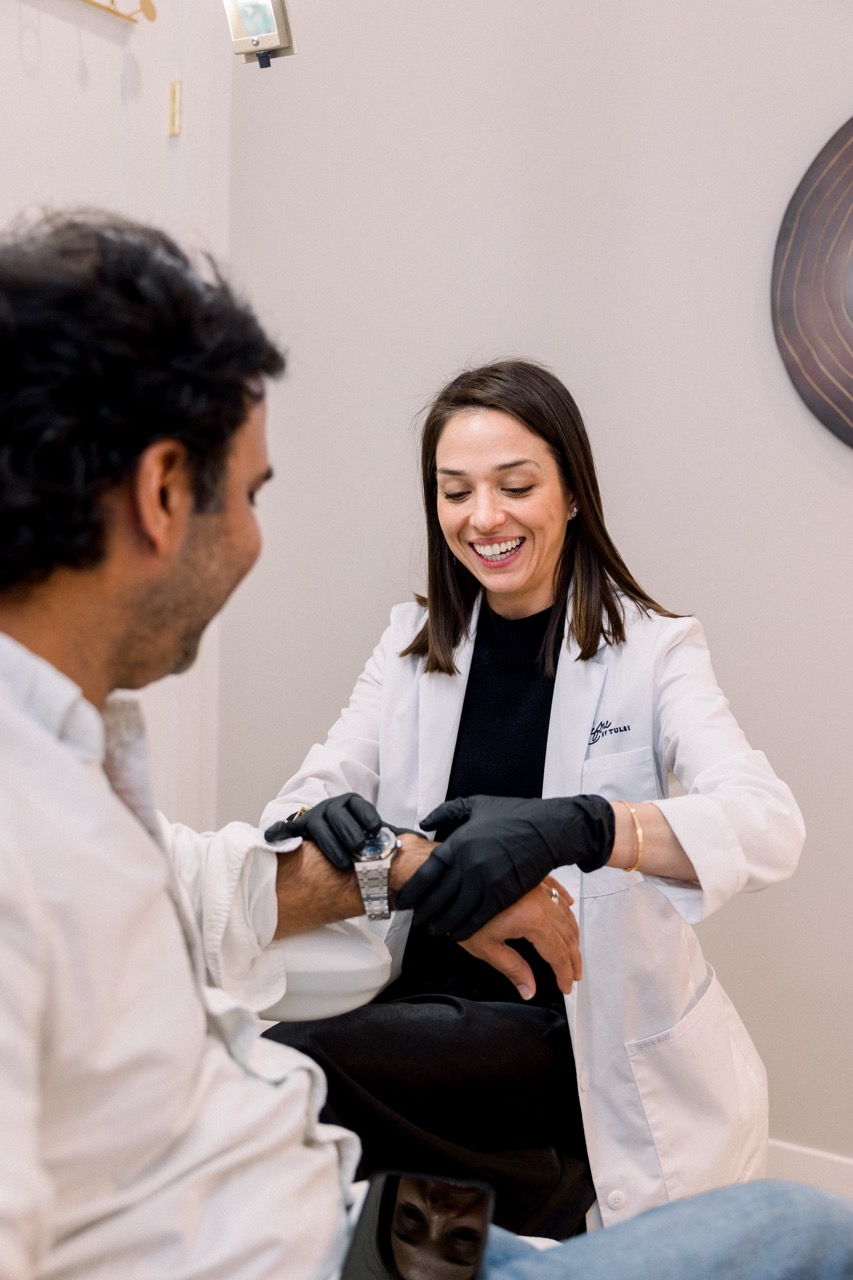
A full review of your history, medications, symptoms, and what you actually want to change. Most of the useful information lives here.
Labs & assessment
Targeted bloodwork sets a baseline and rules out conditions a peptide would mask rather than fix. Fatigue from untreated thyroid disease is not a peptide problem.
Prescription
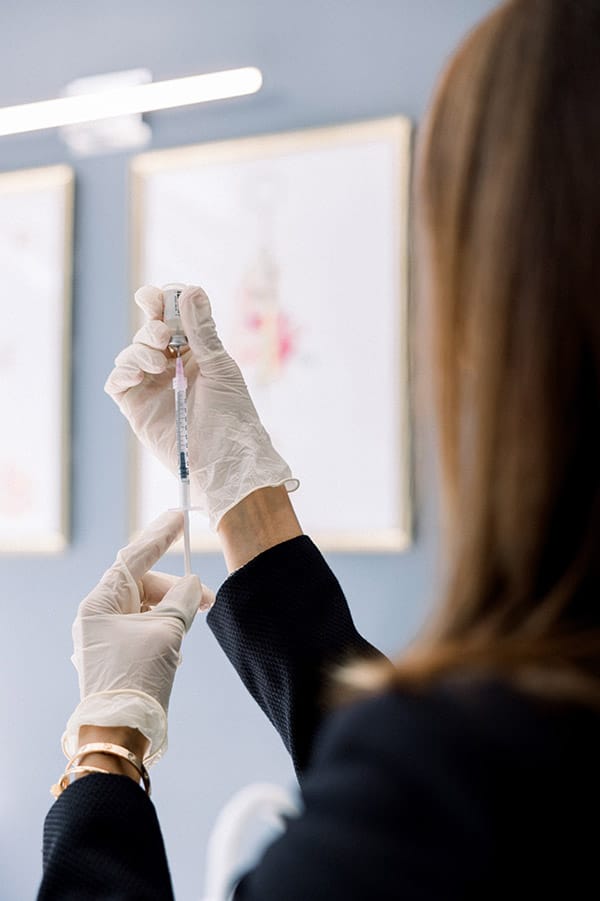
Medical-grade peptides from properly licensed pharmacies, with training on safe self-administration. Most are subcutaneous; some topical, oral, or nasal.
Monitor & refine
Response tracked, dosing adjusted, labs repeated where indicated. A protocol that isn't working gets changed or stopped — not doubled.
Peptides are the protocol.
Your Longevity Score is the proof.
Starting a peptide protocol is a decision worth measuring. Refine OS is the longevity platform behind every plan at Refine — it turns your bloodwork, body composition, wearable data, and how you actually feel into one score, and a biological age.
So you never have to wonder whether your protocol is working. You watch it work — across the six systems that drive how you age.
What it reads
Your care team activates access at your first consultation, once baseline labs are drawn. Refine OS is read alongside your physician — it surfaces patterns for review, and is not a diagnosis.
Your trend
Since starting your protocol
Longevity Score
Your systems
Illustrative screen — not a real patient
Different systems. Different timelines.
Patients ask two questions: what will this actually do, and how long until I notice? Every peptide answers both differently. This is the whole field on one chart.
Onset timings are typical ranges reported in supervised protocols, not guarantees, and vary considerably by individual. Position on this chart is not an endorsement of efficacy — see the evidence discussion in each linked guide.
Popular Peptides Prescribed in Chicago
Filter by what you're trying to change. Each card shows a typical clinic-guided range and its current regulatory standing — because the second one determines whether the first is even available to you.
BPC-157
A synthetic pentadecapeptide derived from a protein in gastric juice. Studied for tendon, ligament, and gut-lining repair. Preclinical evidence is strong and coherent; robust human trial data is limited — we say so plainly.
TB-500
Regulates actin, the structural protein cells need to move. Where BPC-157 signals repair locally, TB-500 helps repair cells travel to the tissue that needs them. That complementarity is why the two are so often paired.
Ipamorelin
Prompts your pituitary to release your own growth hormone in its natural pulsatile rhythm — feedback loops intact. This is not HGH, and the distinction is the entire pharmacological point.
CJC-1295
Acts on a different receptor to ipamorelin, raising the amplitude of each growth-hormone pulse. Used together, the effect exceeds either alone — the most common pairing in the field.
Semaglutide
Slows gastric emptying, prompts insulin release when glucose is high, and signals satiety to the brain. It doesn't burn fat — it restores a satiety signal that in many people was never working properly.
Tirzepatide
Activates both GLP-1 and GIP receptors. In head-to-head evidence it has generally produced greater average weight reduction than semaglutide — though averages describe populations, not you.
AOD-9604
Engineered to isolate growth hormone's fat-metabolism activity without its blood-sugar effects. Human trial results have been modest — this is an adjunct, not a primary weight-loss intervention, and we won't present it as one.
NAD+
Required for the reactions that turn food into cellular energy, and for the sirtuins involved in DNA repair. Levels fall with age. We list it honestly: NAD+ is a coenzyme, not a peptide — clinics that blur this aren't paying attention.
SS-31
Concentrates at the inner mitochondrial membrane, binding cardiolipin to stabilize the machinery that makes your cellular energy. Studied in clinical trials for rare mitochondrial disease — a different population from a healthy adult.
Thymosin Alpha-1
An immune modulator, not a stimulant — it helps the immune system respond appropriately rather than simply harder. Approved as a drug in a number of countries; not FDA-approved in the US.
KPV
The anti-inflammatory tail of α-MSH, keeping the calming activity without the pigmentary effects of the full molecule. Most studied in intestinal inflammation. Chronic gut symptoms deserve a workup before a peptide.
GHK-Cu
Carries copper to the enzyme that cross-links collagen and elastin. Its natural plasma level roughly halves between your twenties and sixties. Note the split status: topical and injectable sit in different regulatory categories.
Dosing ranges are typical clinic-guided figures, not recommendations. Every protocol is individualized after evaluation and, where appropriate, labs. Not everyone is a candidate for every peptide — and we will tell you when the answer is no.
Which peptide protocol fits you?
Eight questions, about two minutes. Your answers go straight to Dr. Kotecha ahead of your consultation — where labs, not a quiz, determine the actual protocol.
What's the primary thing you want to optimize right now?
Which of these resonates with you most?
How would you describe your current health focus?
What's your age range?
How is your sleep and stress load right now?
Have you explored other wellness or longevity therapies?
How do you approach health investments?
How do you feel about self-administering injections at home?
This assessment is an educational tool, not medical advice or a diagnosis. It does not prescribe anything. Your actual protocol is determined by Dr. Tulsi Kotecha, MD after an in-person evaluation and, where appropriate, laboratory testing — and sometimes the honest answer is that no peptide is indicated.
Who peptide therapy is — and isn't — for
A good clinic tells you no when no is the answer. Here is where we draw the line.
Often a good fit
- Recovery from training, injury, or surgery is slower than it used to be
- Weight that resists diet and exercise, often with insulin resistance
- Persistent fatigue and reduced clarity despite adequate sleep
- Declining muscle tone, skin quality, or sleep depth with age
- Chronic inflammatory or gut-related complaints, already worked up
- A longevity-oriented patient optimizing measurable biomarkers
Reasons we may decline
- Active malignancy — several peptides influence angiogenesis and cell growth
- Pregnancy or breastfeeding — safety not established
- Certain endocrine conditions, or medication interactions
- Autoimmune disease, for immune-modulating peptides specifically
- Competitive athletes subject to testing — many peptides are WADA-prohibited
- An undiagnosed symptom that deserves a workup, not a peptide
Cost depends on the peptide, dosing, and route of administration. Labs may be billed separately. Ongoing access is available through the Refine Longevity Club.
Book Now Longevity ClubPeptide therapy risks & side effects
Peptide therapy has a favorable tolerability profile in appropriate, monitored candidates. It is still real medicine, and Dr. Kotecha reviews every risk with you before you decide.
- Injection-site redness, irritation, or bruising — the most commonly reported effect
- Water retention, tingling, or headache with growth-hormone secretagogues
- Nausea, constipation, or reflux with GLP-1s — dose-related, and largely avoidable with slower titration
- Elevated GH and IGF-1 warrant caution with any malignancy history — which is why we run baseline labs
- Immune-modulating peptides require care in autoimmune disease
- The largest real-world risk is not the peptide but unregulated sourcing — research-chemical vendors verify nothing
Peptides are an accelerant, not a substitute. They work best on a foundation of sleep, protein, resistance training, and managed stress — and disappoint most reliably when asked to replace one.
Your Chicago peptide therapy physicians

Dr. Tulsi Kotecha, MD
Dr. Tulsi Kotecha is a board-certified physician specializing in personalized aesthetics, regenerative medicine, and longevity-focused wellness. After years practicing internal medicine, she founded Refine by Tulsi to shift care from reactive treatment to proactive health — helping women feel confident, energized, and supported through every stage of hormonal change.

Dr. Laura Ruof
Dr. Laura Ruof leads the Refine Her Longevity and Hormone Optimization programs, specializing in menopause, metabolic health, and whole-body vitality. Her care model integrates advanced diagnostic testing, precision and evidence-based longevity strategies designed to restore energy, sharpen mental clarity, improve sleep, and support long-term health.
Patient Testimonials
She combines medical expertise with a compassionate approach to care. My results are exactly what I wanted.
She listened carefully to my concerns and guided me through my longevity journey. Her professionalism as an MD really shines through, and I trust her completely.
My lingering shoulder pain disappeared within a few days. This stuff works!
I came in feeling tired and stuck in a fitness plateau. The improvements in muscle recovery and energy were noticeable within weeks. She’s compassionate, detail-oriented, and absolutely an expert in functional wellness.
Dr. Ruof’s expertise is evident — she explains the science clearly, personalizes treatment to my needs, and follows up to adjust where needed. I’ve experienced better sleep, iand more consistent energy. This has been one of the best health decisions I’ve made
I started peptide therapy at Refine by Tulsi with Dr. Ruof who took the time to understand my health history, lifestyle, and goals. I feel stronger, more focused, and more balanced than I have in years.
Peptide therapy FAQ
When prescribed and monitored by a qualified physician, peptide therapy has a favorable tolerability profile for appropriate candidates. Safety depends on correct evaluation, quality sourcing, proper dosing, and follow-up. The larger real-world risk isn't the peptide itself but unregulated sourcing — research-chemical vendors offer no purity verification, no dosing standard, and no medical oversight.
Mostly not FDA-approved, and the compounding rules are genuinely in flux. Of the peptides on this page, only semaglutide and tirzepatide are FDA-approved drugs, in their brand forms. Others were placed in FDA Category 2 in September 2023, with removals in September 2024 and again around April 2026. On July 23–24, 2026, the Pharmacy Compounding Advisory Committee reviews BPC-157, TB-500, KPV and others for the 503A Bulks List — FDA briefing documents propose not adding them. Coming off Category 2, being eligible for compounding, and holding FDA approval are three different things.
No. Growth-hormone secretagogues such as ipamorelin and CJC-1295 prompt your pituitary to release your own growth hormone in its natural pulsatile pattern, leaving your feedback loops intact. Injected HGH overrides that regulation entirely. They are pharmacologically and physiologically distinct, and neither is an anabolic steroid.
It depends on the peptide and the goal — which is exactly what the Signal Map above shows. Energy, sleep, and recovery changes are often noticed within a few weeks. Metabolic and body-composition changes typically unfold over one to three months alongside lifestyle change. Longevity protocols are measured in biomarkers over quarters, not sensations over days.
Yes. Therapeutic peptides are prescribed after a medical evaluation, and where appropriate we use targeted labs to guide selection and dosing. This is not a formality — labs frequently reveal a treatable cause that makes a peptide unnecessary, which is a better outcome than a protocol that masks it.
You should not. Peptides sold as "research use only" sit outside pharmaceutical oversight — purity, sterility, dosing accuracy, and even identity are unverified. Several are also prohibited in competitive sport. Legitimate access runs through a licensed physician and a properly licensed pharmacy, and there is no shortcut around that.
That's what a consultation and, where appropriate, labs determine. The right peptide depends on your goal, your history, your medications, and how you respond. Protocols are chosen intentionally, never from a template — and sometimes the honest answer is that no peptide is indicated.
Programs start from $299 per month, depending on the peptide, dosing, and route of administration. Labs may be billed separately. Pricing is reviewed transparently at consultation, and ongoing access is available through the Refine Longevity Club membership.
Start with your labs.
Book a consultation with Dr. Kotecha and get an honest assessment of whether peptide therapy fits your goals — and what to expect if it does. At either Chicago location.
(618) 298-8574Medical disclaimer: This page is for general educational purposes and is not medical advice, diagnosis, or treatment. Peptide therapy is prescribed only after an in-person medical evaluation and is not appropriate for everyone. Dosing ranges, cadences, cycle lengths, and onset timings shown are typical figures and vary by individual. With the exception of semaglutide and tirzepatide in their brand forms, the substances described are not FDA-approved drugs for the uses discussed; regulatory status of compounded substances changes and was last verified 9 July 2026. Many peptides described are prohibited in competitive sport. Individual results vary. Please consult a qualified physician before beginning any therapy.
Peptide guides from our Chicago clinic
Written and reviewed by Dr. Kotecha. Candid about what the evidence does and doesn't support.
What Is Peptide Therapy? A Complete Guide
What peptides are, how they signal, who they help, and the regulatory picture.
Read guide →Peptides for Menopause
How Targeted Peptide Therapy Helps Women Reclaim Energy, Sleep, and Mental Clarity.
Read guide →Refine Her: Women's Wellness Program
Your symptoms aren't in your head — they have a biological root.
Learn More →Peptide Therapy for Men Over 40
Testosterone may resolve 60–70% of their symptoms, the remaining 30–40%,requires a different set of tools.
Learn More →PCOS Is Now PMOS
What the Name Change Means for Women’s Health.
Learn More →NAD+ IV vs Injections vs Nasal Spray
Why NAD+ Matters (Especially After 40)
Learn More →